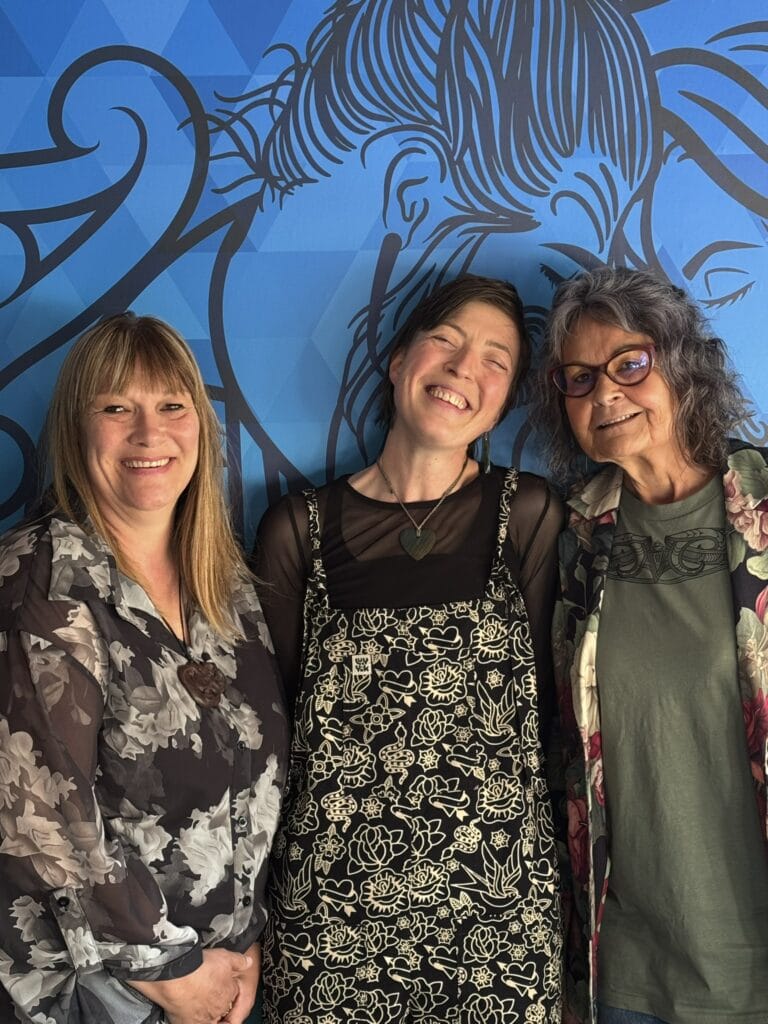
When Shahan first began experiencing symptoms, she knew something wasn’t right, but it would take months of uncertainty, repeated doctor visits, and persistence before she finally had answers. What followed was a life-changing diagnosis, major surgery, and a long road to recovery. Throughout it all, the support of the Ngā Kete Cancer Kaiārahi Service became a crucial part of her journey.
My journey started around July 2024. I was waking up with night sweats, and it felt like I had a graze on the back of my lung. That’s the only way I can really describe it.
I went to the doctor and was told it was probably a chest infection. I was given antibiotics, and for a while I felt better. But within six weeks, the sweats were back. The flu-like symptoms returned, and I was constantly exhausted.
I have two young children, and my first doctor told me I was just a busy mum. But I knew something wasn’t right. I went back and forth to the doctor about five times.
Deep down, I knew something was very wrong.By the end of the year, I had gone through five courses of antibiotics. Eventually, my symptoms eased off. I started my massage therapy degree, got married, and everything seemed good.
But, while I felt better, I had started losing a lot of weight and I couldn’t seem to gain it back.
Then in May 2025, the night sweats came back. I went to a new doctor and that was when things started to move quickly. A chest X-ray showed pneumonia and a small lesion. Then came more imaging, and eventually a CT scan. I then had a bronchoscopy. When the results came back, I was told I had a 26mm neuroendocrine tumour on my lung. I was diagnosed with stage 1 lung cancer. The tumour was positioned right where I had been feeling that pain all along.
Tumours like mine are rare, especially in someone my age. Most people who get them are much older. I was only 34.
I was sent to Dunedin for surgery and had the tumour removed. There were complications afterward though. I had an air leak in my chest and needed drains. One came out quickly, but the second stayed in for two weeks. I spent two weeks in hospital and later needed a blood patch, which thankfully worked.
Managing the pain after surgery meant being on morphine, which helped physically but also dulled everything emotionally. I’m now almost off it. My follow-up results have been positive. No spread, and no need for chemotherapy or radiation, which I’m incredibly grateful for.
But what stands out most to me in all of this is the support I received from Ngā Kete.
I had been seeing a Ngā Kete Mahana counsellor who visited the Southern Institute of Technology weekly, supporting me through a period when my mental health had already begun to suffer after months of feeling unwell. Following my cancer diagnosis, the counsellor introduced me to the Ngā Kete Cancer Kaiārahi Service.
I remember the first time I met the kaimahi. I was sitting on my beanbag at home, telling them my story. They simply said, “We can do this, this, and this, just leave it to us.” And they meant it.
At a time when everything felt overwhelming, they stepped in and made things manageable.
They organised petrol reimbursements, accommodation for my time in Dunedin, and grocery vouchers to help ease the pressure on my young whānau. Those practical supports made a huge difference, especially with two young kids at home.
But it wasn’t just the practical help, it was the emotional support. I could call anytime, and they were always there to listen. They reassured me, checked in on me, and made me feel like I wasn’t going through this alone.
After months of feeling unwell and knowing something was seriously wrong, having that level of support and validation meant everything. It lifted a huge weight off me, not just physically, but mentally and emotionally too.
Now, about six months on from surgery, I’m in what I’ve learned is called the “hidden recovery” stage. Physically, I’m healing well, but there’s still fatigue, mental fog, and the emotional toll of everything that’s happened. Having continued support, especially from someone outside my immediate whānau, has been so important.
I also attended Manaaki Manawa, the Ngā Kete cancer support group at the marae, which was really special. It reminded me that I’m not alone in this.
Looking back, this experience has changed me. It’s been incredibly hard, and it’s taken a toll on my whānau, especially my young kids, who didn’t fully understand what was happening but knew something was wrong.
But it’s also shown me how strong I am. I never thought I could go through something like this, but I did.
Having Ngā Kete in my corner meant everything. They were my cheerleaders from the beginning reminding me that I’ve got this, that I would get through it, and that I wasn’t alone.