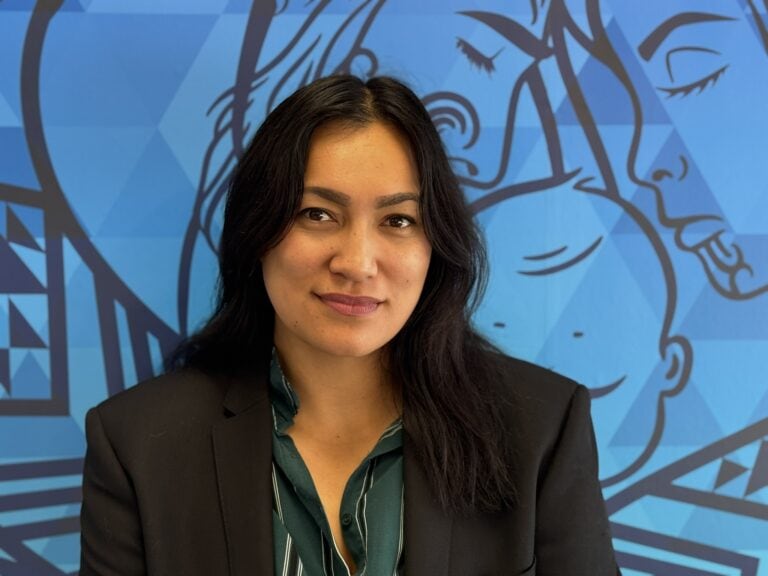
As told by Ngareta Martin
Restorative justice and Te Pae Oranga (Iwi Community Panels) bring people together to address harm and promote accountability. For facilitator Ngareta Martin, a typical day involves preparing panel members, meeting with those involved in TPO and Restorative Justice, and guiding conversations aimed at accountability, understanding and making things right.
The day begins quietly.
Before any meeting or hui, before stepping into a room where people will speak about harm, responsibility, and healing, there is a moment of pause.
When a facilitator wakes on a day where a conference is scheduled, the first thought is often about the privilege of the role. It is never taken lightly.
There is real responsibility in sitting alongside people during some of the most vulnerable moments of their lives. Before arriving, there is always a personal check-in:
Am I regulated? Am I clear? Am I bringing anything into this space that doesn’t belong here?
People trust the process with deeply personal and often painful parts of their stories. A facilitator must arrive grounded, alert, and ready to hold that space.
What many people don’t see is that much of the work happens long before anyone sits together.
In Restorative Justice, facilitators meet separately with both the victim and the person responsible for the harm. These pre-conference meetings explore readiness, emotional safety, and expectations.
If the conditions are not right, the conference does not proceed.
Preparation protects everyone involved.
A large part of that preparation is relationship-building. People are unlikely to speak honestly in a shared room if they have not first felt heard individually. These early conversations allow people to understand the process, ask questions, and know they will not be dismissed.
During these meetings, facilitators listen carefully.
They listen for accountability without minimisation. When someone can acknowledge the harm they caused without immediately defending or shifting blame, it signals readiness.
From victims, facilitators listen for clarity around what they need. Sometimes it is answers. Sometimes it is acknowledgement. Sometimes it is simply the chance to speak and be heard.
When the day of a conference arrives, the room can hold many things: tension, uncertainty, grief, courage, and hope.
Conversations unfold slowly and deliberately. There is structure, but the process is deeply human.
Sometimes the most important moments are silence. Silence often means something has landed, or someone is gathering the courage to speak. It is not something to rush.
Emotions can rise in these spaces, and that is expected. Restorative Justice does not remove emotion from the room. Anger, grief, and overwhelm are often expressions of how deeply something matters.
The facilitator’s role is not to suppress those emotions, but to regulate the space so the conversation can continue safely.
At the centre of both Restorative Justice and Te Pae Oranga is accountability.
In Restorative Justice, accountability is often expressed through direct acknowledgement of harm:
“This is what I did, and this is the impact it had.”
Those words are spoken directly to the person affected.
In Te Pae Oranga (Iwi Community Panels), accountability happens in front of respected community members. It recognises that behaviour affects not only individuals, but the wider community.
In both spaces, genuine accountability includes a willingness to repair harm and change behaviour. For many people, it is the first time they have been given the opportunity to pause, reflect, and take responsibility in a meaningful way.
Facilitating that moment is humbling.
Restorative processes require courage from everyone involved.
For victims, it can take immense strength to sit across from someone who has caused harm and speak openly about what happened.
For the person responsible, courage means stepping into discomfort and listening without defensiveness to the impact of their actions. In Te Pae Oranga, it may also mean acknowledging wrongdoing in front of respected members of the community.
That vulnerability can be confronting, but it is often where growth begins.
Te Pae Oranga provides a community-led response to lower-level offending. Participants are referred by Police when diversion from court is appropriate and safe.
The process offers both direction and closure.
Direction by helping individuals understand what led to their behaviour and what needs to change.
Closure by addressing the issue directly rather than allowing it to escalate through the court system.
Completing the process can also mean avoiding court and a criminal conviction, protecting employment and future opportunities while still requiring meaningful accountability.
Iwi Community Panels are made up of trained and respected members of the community, often people who have spent their lives supporting others: teachers, counsellors, support workers, navigators, and grandparents.
When they speak about responsibility and expectations, it carries weight.
The partnership with Police is also a key part of the process. By supporting community-led responses, Police help create pathways for accountability outside the courtroom while still maintaining public safety.
Hope is woven throughout this work.
It appears when someone tells their story, when a victim feels heard, or when an individual realises they can choose a different path.
Sometimes it is found in small moments. A pause, a reflection, a shift in perspective.
Working in restorative spaces also requires careful attention to wellbeing. Facilitators regularly debrief, reflect, and maintain clear professional boundaries.
They facilitate the process, but they do not carry the outcomes alone.
Within teams there is constant support, conversation, and space to process the work together.
For some facilitators, the work is deeply personal. Life experiences can shape the belief that opportunities like Restorative Justice and Te Pae Oranga truly matter.
When people are given direction, support, and early intervention, their paths can change.
Being part of a process that offers accountability, dignity, and the possibility of real change is not just work.
It is meaningful.
And every day a facilitator walks into that room, they carry that purpose with them.